
Blog
Can Doctors Prescribe Peptides? Benefit, All you need to know


Can Doctors Prescribe Peptides? A Complete Guide Benefits
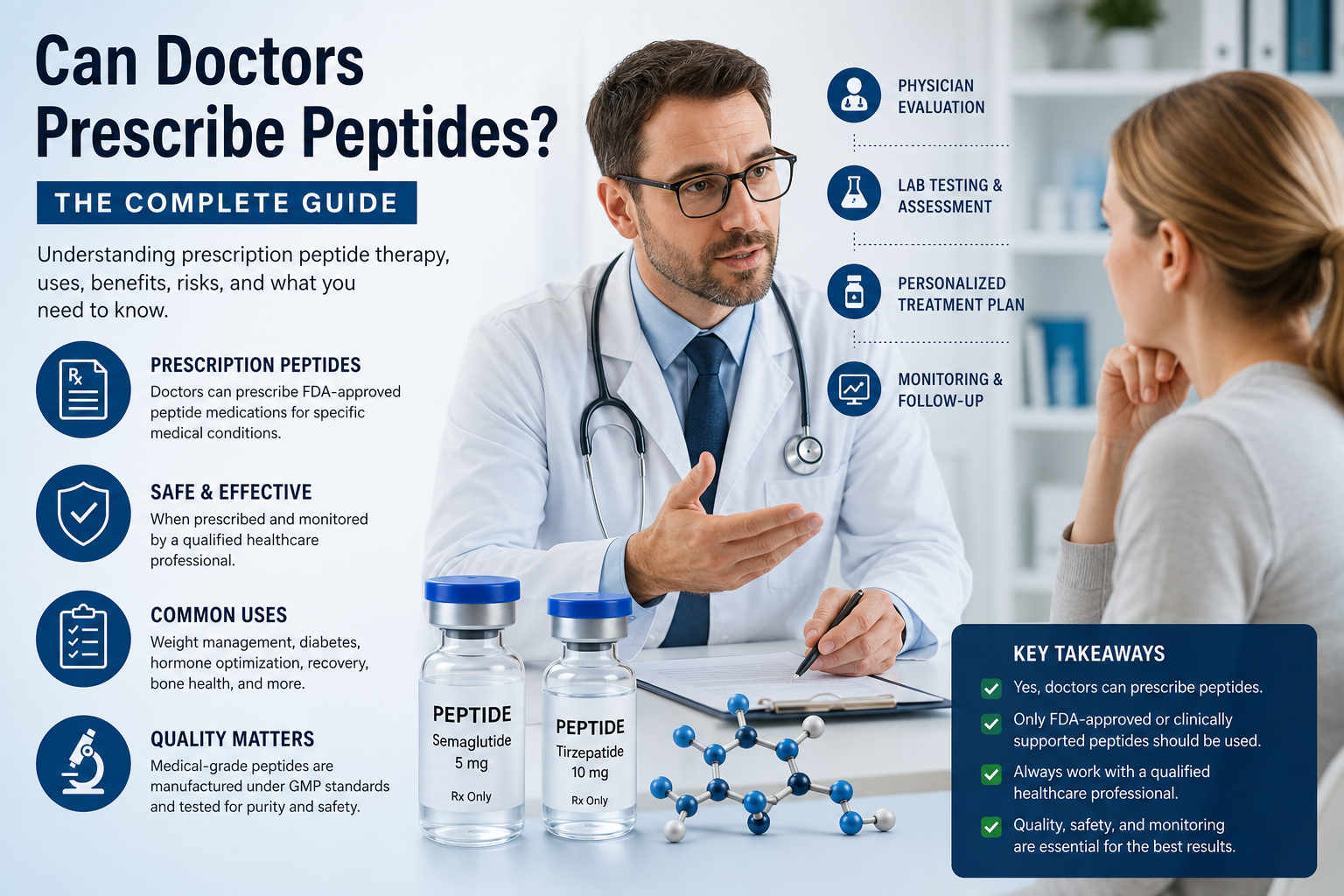
Peptide therapy has become one of the fastest-growing areas in modern medicine. From weight management and hormone optimization to tissue repair and metabolic health, peptides are increasingly being explored for their therapeutic potential. As interest continues to rise, many patients ask a simple but important question:
Can doctors prescribe peptides?
The answer is yes—but not all peptides are treated the same. Some peptides are FDA-approved prescription medications that physicians can legally prescribe for specific medical conditions, while others remain experimental or are available only through clinical research. Understanding these distinctions is essential before beginning peptide therapy.
This comprehensive guide explains everything you need to know about physician-prescribed peptides, including their legality, approved medical uses, benefits, risks, regulations, and how to determine whether peptide therapy is right for you.
What Are Peptides?
Peptides are short chains of amino acids, generally consisting of between two and fifty amino acids. They serve as biological messengers throughout the body, regulating countless physiological processes including:
- Hormone production
- Immune system function
- Tissue repair
- Muscle growth
- Metabolism
- Appetite regulation
- Sleep cycles
- Cellular communication
Unlike proteins, peptides are much smaller, allowing them to interact with receptors more specifically. Many naturally occurring hormones including insulin and glucagon are peptides.
Modern pharmaceutical science has developed synthetic peptides that mimic naturally occurring compounds, making them valuable therapeutic agents for numerous medical conditions.
Can Doctors Legally Prescribe Peptides?
Yes. Licensed physicians can prescribe peptide medications when doing so complies with applicable medical regulations and prescribing laws.
Prescription peptides generally fall into two categories:
1. FDA-Approved Peptide Medications
These medications have undergone extensive clinical trials demonstrating safety and effectiveness for specific medical indications.
Examples include:
- Semaglutide
- Tirzepatide
- Insulin
- Calcitonin
- Teriparatide
- Liraglutide
Doctors prescribe these medications daily for conditions such as:
- Type 2 diabetes
- Obesity
- Osteoporosis
- Hormonal deficiencies
- Endocrine disorders
These medications are manufactured under strict Good Manufacturing Practice (GMP) standards and undergo rigorous quality testing.
2. Off-Label Peptide Prescriptions
Physicians may also prescribe certain peptide medications for off-label uses, provided there is sound medical judgment and supporting scientific evidence.
Off-label prescribing is common throughout medicine and simply means the medication is used for an indication different from its FDA-approved labeling.
However, physicians must carefully evaluate:
- Patient safety
- Scientific evidence
- Potential benefits
- Possible adverse effects
- Informed patient consent
Why Do Doctors Prescribe Peptides?
Peptides can target specific biological pathways with remarkable precision.
Common medical reasons include:
Weight Management
GLP-1 receptor agonists have transformed obesity treatment.
These medications:
- Reduce appetite
- Slow gastric emptying
- Improve insulin sensitivity
- Promote sustainable weight loss
Many physicians now integrate peptide therapy into comprehensive weight-management programs that include nutrition and exercise.
Diabetes Management
Several peptide medications significantly improve blood glucose regulation.
Benefits include:
- Better insulin secretion
- Lower blood sugar
- Reduced cardiovascular risk
- Improved metabolic health
These medications have become standard treatment options for millions of patients worldwide.
Growth Hormone Disorders
Certain peptides stimulate the body’s natural release of growth hormone.
Doctors may prescribe these therapies when patients have confirmed deficiencies affecting:
- Growth
- Recovery
- Muscle mass
- Bone density
These treatments require careful endocrine evaluation and ongoing monitoring.
Osteoporosis
Some peptide medications stimulate new bone formation rather than merely slowing bone loss.
Patients at high fracture risk may benefit from these therapies under physician supervision.
Fertility Treatments
Reproductive medicine frequently uses peptide hormones.
They help regulate:
- Ovulation
- Egg maturation
- Hormone production
- Assisted reproductive technologies
Hormonal Disorders
Endocrinologists may prescribe peptide medications for conditions involving:
- Pituitary dysfunction
- Adrenal disorders
- Thyroid regulation
- Reproductive hormone imbalances
Are All Peptides Prescription Drugs?
No.
The peptide market consists of several distinct categories.
Prescription Peptides
These require evaluation by a licensed healthcare provider and are dispensed through licensed pharmacies.
Examples include:
- Semaglutide
- Tirzepatide
- Insulin
- Teriparatide
- Liraglutide
Research Peptides
These compounds are intended for laboratory research and are not approved for human use.
Although marketed online, research peptides should not be self-administered.
Common examples often discussed online include:
Many remain under investigation, and their safety, efficacy, and quality may not be established for routine clinical use.
Cosmetic Peptides
Some peptides are incorporated into skincare products.
These topical peptides may improve:
- Collagen production
- Skin hydration
- Fine lines
- Elasticity
They are entirely different from injectable therapeutic peptides.
How Do Doctors Determine Whether Peptide Therapy Is Appropriate?
Peptide therapy is not appropriate for everyone.
A responsible physician typically performs a comprehensive evaluation.
This often includes:
Medical History
Doctors review:
- Existing medical conditions
- Current medications
- Previous treatments
- Allergies
- Family history
Physical Examination
A clinical examination helps identify possible underlying conditions requiring treatment.
Laboratory Testing
Testing may include:
- Blood glucose
- HbA1c
- Hormone panels
- Liver function
- Kidney function
- Thyroid function
- Lipid profile
Some patients may require imaging studies or specialized endocrine testing.
Risk Assessment
The physician evaluates:
- Potential side effects
- Drug interactions
- Contraindications
- Pregnancy status
- Cancer history
- Cardiovascular disease
Only after a full assessment can an individualized treatment plan be developed.
What Are the Benefits of Physician-Supervised Peptide Therapy?
Medical supervision offers several advantages.
Accurate Diagnosis
Symptoms such as fatigue, weight gain, or poor recovery may have many possible causes.
A physician ensures the correct diagnosis before initiating treatment.
Appropriate Dosing
Peptide medications often require gradual dose escalation.
Medical supervision minimizes side effects while optimizing therapeutic outcomes.
Quality Assurance
Prescription medications come from regulated manufacturers that follow Good Manufacturing Practice (GMP) standards.
This helps ensure:
- Identity
- Purity
- Potency
- Sterility
- Consistency
Monitoring
Doctors regularly assess:
- Treatment effectiveness
- Laboratory values
- Side effects
- Long-term safety
Adjustments can be made whenever necessary.
What Are the Risks of Peptide Therapy
Although many FDA-approved peptide medications have favorable safety profiles, they still carry risks.
Potential adverse effects vary by medication but may include:
Gastrointestinal Symptoms
These commonly include:
- Nausea
- Vomiting
- Diarrhea
- Constipation
- Reduced appetite
Many symptoms improve over time with careful dose escalation.
Injection Site Reactions
Patients may experience:
- Redness
- Swelling
- Bruising
- Mild discomfort
Allergic Reactions
Although uncommon, serious allergic reactions require immediate medical attention.
Hormonal Effects
Hormone-related peptides may influence:
- Blood sugar
- Blood pressure
- Fluid balance
- Endocrine function
Regular monitoring helps detect problems early.
Why Should You Avoid Buying Peptides from Unverified Sources?
The internet contains thousands of vendors advertising peptides.
Unfortunately, many products sold online lack:
- Identity verification
- Purity testing
- Sterility assurance
- Accurate labeling
- Manufacturing transparency
Independent testing has found that some products marketed as research peptides contain incorrect ingredients, contamination, or inconsistent dosing.
Choosing medications prescribed by a licensed healthcare professional and dispensed by reputable pharmacies significantly reduces these risks.
How Are Prescription Peptides Manufactured?
High-quality pharmaceutical peptides are produced under Good Manufacturing Practice (GMP) standards.
The manufacturing process generally includes:
Raw Material Qualification
Manufacturers carefully evaluate incoming materials before production.
Peptide Synthesis
Advanced automated synthesis systems produce peptide chains with high precision.
Purification
Techniques such as High-Performance Liquid Chromatography (HPLC) remove impurities.
Analytical Testing
Manufacturers verify:
- Identity
- Purity
- Potency
- Stability
- Sterility (where applicable)
Certificates of Analysis (COAs) document quality testing results for each batch.
Packaging
Products are packaged under controlled conditions to maintain stability and product integrity throughout distribution.
Questions to Ask Your Doctor Before Starting Peptide Therapy
Patients should feel comfortable discussing treatment in detail.
Helpful questions include:
- Why do you recommend this peptide?
- Is it FDA-approved for my condition?
- What benefits should I realistically expect?
- What side effects are most common?
- How long will treatment last?
- How often will monitoring be required?
- Are there lifestyle changes I should make alongside treatment?
- What happens if I stop taking the medication?
These conversations help patients make informed decisions.
Who Should Avoid Certain Peptide Treatments?
Depending on the specific medication, peptide therapy may not be appropriate for everyone.
Your doctor may recommend against a particular peptide if you have certain medical conditions, such as a history of severe allergic reactions to the medication, specific endocrine disorders, or other contraindications listed in the product labeling. Pregnancy, breastfeeding, and certain cancers may also require special consideration.
Always disclose your full medical history and all medications or supplements you are taking before starting peptide therapy.
The Future of Peptide Medicine
Peptide therapeutics continue to expand rapidly.
Researchers are investigating peptide-based treatments for:
- Alzheimer’s disease
- Cardiovascular disease
- Autoimmune disorders
- Chronic pain
- Liver disease
- Kidney disease
- Cancer therapies
- Rare genetic disorders
Advances in peptide engineering, targeted drug delivery, and longer-acting formulations may broaden the role of peptide medicines in the coming years. As clinical evidence grows, additional peptides may receive regulatory approval for new medical indications.
Frequently Asked Questions (FAQs)
Can any doctor prescribe peptides?
Any licensed physician can prescribe FDA-approved peptide medications within the scope of applicable laws and regulations. Some physicians have additional expertise in endocrinology, obesity medicine, sports medicine, or hormone therapy.
Do I need a prescription for peptide therapy?
For FDA-approved prescription peptide medications, yes. Products marketed as “research peptides” are not approved for human use and should not be self-administered.
Are peptides safer than steroids?
Peptides and anabolic steroids are different classes of compounds with different mechanisms, benefits, and risks. Safety depends on the specific medication, the patient’s health, the indication, and whether treatment is medically supervised.
How long does peptide therapy take to work?
The timeline varies widely depending on the peptide and the condition being treated. Some therapies produce noticeable effects within weeks, while others may require several months to achieve their full clinical benefit.
Is peptide therapy covered by insurance?
Insurance coverage depends on the medication, the diagnosis, the patient’s insurance plan, and whether the prescribed use meets the insurer’s coverage criteria. Cosmetic or experimental uses are less likely to be covered.
Can I buy peptides online without a prescription?
Some websites sell peptide products directly to consumers, but many are marketed as research chemicals and are not intended for human use. Purchasing injectable peptides from unverified sources carries significant quality and safety risks.
Can Doctors prescribe peptides Final Thoughts
Doctors can prescribe peptides, but the type of peptide, its regulatory status, and the medical reason for treatment all matter. FDA-approved peptide medications have become important tools in managing conditions such as diabetes, obesity, osteoporosis, and certain hormone disorders. These therapies should be used under the guidance of a qualified healthcare professional who can evaluate your medical history, monitor your response, and adjust treatment as needed.
At the same time, patients should approach non-approved or research peptides with caution. Products obtained from unverified online sellers may lack proper quality control, accurate labeling, or safety testing. Choosing physician-supervised care and medications manufactured under rigorous quality standards provides the best opportunity for safe and effective treatment.
As peptide science continues to evolve, these innovative therapies are likely to play an even larger role in personalized medicine, offering targeted treatment options for a growing number of medical conditions while emphasizing the importance of evidence-based prescribing and patient safety.
What if your doctor could write you a prescription for that research peptide everyone’s talking about on Reddit?
They can’t. Not legally, anyway.
This is the question thousands of people ask every month.
They’ve heard about BPC-157 for injuries, TB-500 for recovery, or Ipamorelin for anti-aging.
They want the benefits but want to do things the right way, through their physician, with proper medical oversight.
The problem is that the regulatory landscape for peptides is far more complex than most people realize, and understanding where research peptides fit into the legal framework could save you from significant legal, financial, and health risks.
The short answer is no, doctors cannot legally prescribe research-grade peptides for human use. But that short answer obscures a massive amount of nuance about what doctors can prescribe, which peptides fall into which regulatory categories, and how you can access legitimate peptide therapy safely. This guide covers everything you need to know about peptide regulations, the difference between research and pharmaceutical-grade compounds, and your legal options for obtaining peptide therapy.
Understanding the difference between research peptides and pharmaceutical peptides
The distinction matters. It’s not just labeling semantics or marketing language.
Research peptides and pharmaceutical-grade peptides exist in completely different regulatory universes. Research peptides are manufactured for laboratory use, scientific experiments, and in vitro studies. They carry labels like “research use only” or “not for human consumption,” and these labels aren’t suggestions. They’re legal requirements that define how these compounds can be sold and used.
Pharmaceutical-grade peptides, on the other hand, are manufactured under strict FDA guidelines, tested for purity and potency, and approved for human therapeutic use. The manufacturing processes differ dramatically. The quality control standards differ. The legal status differs. And most importantly for this discussion, the prescribing rules differ entirely.
What makes a peptide “research grade”?
Research-grade peptides are synthesized for laboratory applications. They’re used in cell culture studies, animal research, and academic investigations. The companies that produce them aren’t held to the same manufacturing standards as pharmaceutical companies because the products aren’t intended to enter human bodies.
This matters for several reasons.
Purity requirements for research peptides are lower. A research peptide might be 95% pure, which is perfectly acceptable for laboratory experiments but potentially concerning for human injection. Pharmaceutical-grade compounds typically require 98-99%+ purity with extensive documentation of exactly what comprises that remaining percentage.
Testing requirements differ too. Research peptides may undergo basic quality checks, but they don’t face the rigorous stability testing, sterility verification, and batch-to-batch consistency requirements that pharmaceutical compounds must meet. When you’re injecting something into your body, these differences aren’t trivial, they’re potentially dangerous.
The safety implications extend beyond purity. Research peptides may contain synthesis byproducts, residual solvents, or degradation products that haven’t been characterized or tested for human safety. Pharmaceutical manufacturing processes specifically eliminate or control these contaminants.