Blog
What makes a peptide “pharmaceutical grade”?

Pharmaceutical Grade Peptides: Everything You Need to Know
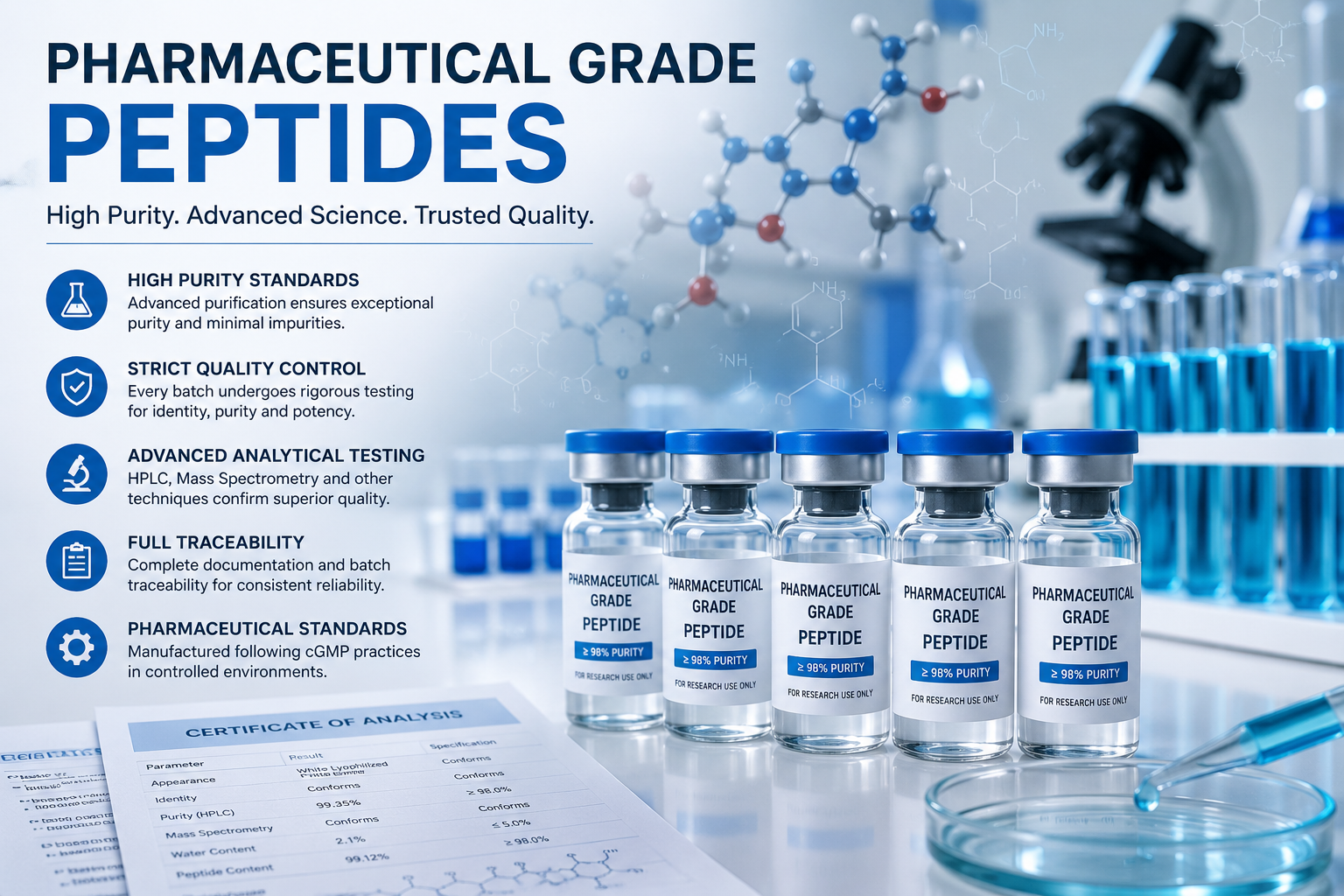
Peptides have become an important focus of modern biomedical research due to their unique biological properties and diverse applications in scientific investigation. As interest in peptide science continues to grow, one phrase appears frequently among researchers and healthcare professionals alike pharmaceutical grade peptides. This designation reflects a level of manufacturing quality, purity, and regulatory control that distinguishes certain peptide products from those intended solely for laboratory research.
Understanding what pharmaceutical grade peptides are is essential for anyone exploring peptide manufacturing, quality assurance, or regulatory pathways. While peptides themselves are short chains of amino acids that serve numerous biological functions, not all peptide products are produced under the same manufacturing standards. Differences in production methods, analytical testing, documentation, and quality systems can significantly influence how peptide products are classified and used.
In this guide, we’ll explore what pharmaceutical grade peptides are, how they are manufactured, the quality standards associated with them, the analytical testing methods used to verify purity, and the factors that differentiate pharmaceutical-grade products from research-grade materials. We’ll also discuss why quality assurance, manufacturing consistency, and regulatory compliance play such important roles in peptide development.
What Are Pharmaceutical Grade Peptides?
Pharmaceutical grade peptides are peptide compounds manufactured under stringent quality systems designed to ensure consistent identity, purity, potency, and safety. These products are typically produced using highly controlled manufacturing processes that follow recognized pharmaceutical quality standards.
Unlike peptides produced exclusively for exploratory laboratory research, pharmaceutical-grade materials are manufactured with rigorous attention to documentation, traceability, contamination control, and batch consistency. Every stage of production from raw material selection through synthesis, purification, testing, packaging, and storage is carefully monitored to maintain product integrity.
The term “pharmaceutical grade” refers primarily to manufacturing quality rather than the biological activity of the peptide itself. Two identical peptide sequences may differ substantially in overall quality depending on how they were synthesized, purified, tested, and documented.
For manufacturers, achieving pharmaceutical-grade quality requires adherence to standardized operating procedures, validated production methods, and comprehensive analytical testing designed to verify that each batch meets predefined quality specifications.
Understanding Peptides and Their Importance
Peptides are naturally occurring molecules composed of relatively short chains of amino acids linked together through peptide bonds. They play essential roles throughout biology by acting as hormones, signaling molecules, neurotransmitters, immune modulators, and growth regulators.
Researchers continue investigating peptides because they often exhibit high biological specificity. Unlike many small-molecule compounds, peptides can interact with particular receptors or biological pathways with remarkable precision.
Modern peptide science encompasses numerous research fields, including:
- Endocrinology
- Metabolic research
- Cell signaling
- Tissue regeneration
- Immunology
- Neuroscience
- Oncology research
- Cardiovascular biology
Their versatility has contributed to growing scientific interest in peptide synthesis technologies capable of producing highly purified molecules for both research and pharmaceutical development.
What Makes a Peptide “Pharmaceutical Grade”?
Several characteristics distinguish pharmaceutical grade peptides from lower-grade materials. Rather than depending on a single measurement, pharmaceutical quality results from an integrated manufacturing system that combines high-quality raw materials, validated production methods, extensive analytical testing, and strict quality management.
High Purity Standards
Purity is among the most important indicators of peptide quality. During synthesis, unintended peptide fragments or chemical by-products may form alongside the desired peptide sequence. These impurities must be removed through sophisticated purification techniques before the finished product reaches acceptable quality specifications.
High-performance purification systems help eliminate:
- Truncated peptide fragments
- Incomplete synthesis products
- Oxidized molecules
- Residual protecting groups
- Organic synthesis impurities
- Solvent residues
Higher purity generally contributes to improved consistency during laboratory evaluation while minimizing unwanted contaminants.
Controlled Manufacturing Environment
Pharmaceutical manufacturing emphasizes environmental control throughout production.
Facilities commonly incorporate:
- Controlled cleanrooms
- HEPA air filtration
- Temperature monitoring
- Humidity control
- Sterile processing environments where appropriate
- Equipment qualification
- Environmental monitoring programs
These controls reduce contamination risks while improving manufacturing consistency across production batches.
Comprehensive Documentation
Every manufacturing step is carefully documented.
Documentation may include:
- Raw material traceability
- Batch production records
- Equipment calibration
- Process validation
- Analytical testing reports
- Stability studies
- Packaging records
- Distribution tracking
This documentation allows manufacturers to verify consistency while supporting regulatory compliance.
How Pharmaceutical Grade Peptides Are Manufactured
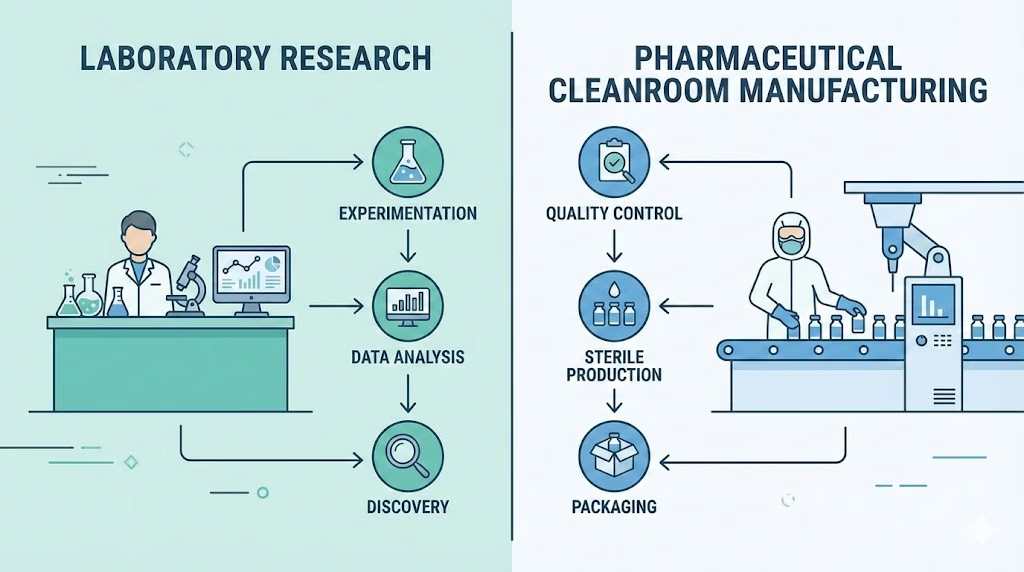
Producing pharmaceutical grade peptides requires sophisticated manufacturing technologies that combine chemistry, engineering, analytical science, and quality management.
Although manufacturing processes vary depending on peptide complexity, production generally follows several major stages.
1. Peptide Design
Scientists first determine the precise amino acid sequence required for the intended molecule.
Sequence design considers factors such as:
- Molecular stability
- Structural characteristics
- Solubility
- Biological interactions
- Manufacturing feasibility
Even small modifications in amino acid sequence may substantially alter peptide properties.
2. Solid-Phase Peptide Synthesis (SPPS)
Most modern peptides are manufactured using Solid-Phase Peptide Synthesis (SPPS).
This highly efficient method assembles peptides one amino acid at a time while the growing peptide chain remains attached to an insoluble resin.
Each manufacturing cycle typically involves:
- Deprotection
- Amino acid activation
- Coupling reactions
- Washing steps
- Quality verification
Because each amino acid is added sequentially, the process allows remarkable control over peptide construction.
3. Cleavage and Deprotection
Once synthesis is complete, the finished peptide is chemically separated from the resin support.
Additional chemical reactions remove temporary protecting groups that prevented unwanted reactions during synthesis.
The resulting crude peptide then proceeds to purification.
4. Advanced Purification
Purification is one of the most critical stages of pharmaceutical peptide manufacturing.
High-performance liquid chromatography (HPLC) is commonly used to separate the desired peptide from impurities based on differences in chemical properties.
Purification removes:
- Failed synthesis products
- Short peptide fragments
- Residual reagents
- Organic contaminants
- Side reaction products
Multiple purification cycles may be necessary to achieve desired quality targets.
5. Analytical Quality Testing
Every production batch undergoes extensive analytical testing before release.
Common laboratory techniques include:
High-Performance Liquid Chromatography (HPLC)
HPLC evaluates peptide purity by separating individual molecular components.
Researchers use chromatographic profiles to verify that impurities remain within predefined specifications.
Mass Spectrometry (MS)
Mass spectrometry confirms molecular weight and verifies that the synthesized peptide matches the intended amino acid sequence.
This technique provides highly accurate molecular identification.
Amino Acid Analysis
Some manufacturers perform amino acid composition analysis to further verify peptide identity and manufacturing consistency.
Sterility Testing
Where applicable, manufacturers perform sterility testing to ensure products meet microbiological quality standards.
Why Quality Control Is Critical
Quality control extends throughout the entire manufacturing lifecycle rather than occurring only after production has finished.
Manufacturers implement quality control systems to monitor:
- Raw material acceptance
- Manufacturing precision
- Equipment performance
- Environmental conditions
- Batch consistency
- Final product specifications
These quality systems reduce manufacturing variability while helping ensure reproducible results across production batches.
For researchers, consistent product quality is essential because variability between batches can complicate experimental interpretation. High manufacturing standards therefore support both scientific reliability and long-term confidence in peptide products.
What makes a peptide “pharmaceutical grade”?
Pharmaceutical-grade peptides have undergone the FDA approval process. This isn’t a rubber stamp. It’s years of clinical trials, extensive safety data, manufacturing facility inspections, and ongoing quality monitoring. Companies invest hundreds of millions of dollars to bring a single peptide through this process.
The FDA approval process for peptides involves multiple phases. First, preclinical studies establish basic safety and efficacy in laboratory and animal models. Then Phase 1 trials test safety in small groups of humans. Phase 2 trials evaluate efficacy and dosing. Phase 3 trials provide the large-scale data needed to demonstrate the drug works as claimed. Only after successfully completing all phases does the FDA consider approval.
Examples of FDA-approved peptide medications include semaglutide, marketed as Ozempic and Wegovy, for diabetes and weight loss. Liraglutide, sold as Victoza and Saxenda, treats similar conditions. Tirzepatide, branded as Mounjaro and Zepbound, represents the newest generation of GLP-1 receptor agonists. Insulin, perhaps the most famous peptide drug, has been saving lives for a century. Oxytocin is prescribed for labor induction. These are all peptides. They’re all legal to prescribe. They’re all pharmaceutical grade.
The FDA regulatory framework for peptide compounding
Understanding FDA regulations requires knowing about the 503A and 503B frameworks. These sections of the Federal Food, Drug, and Cosmetic Act govern how compounding pharmacies can prepare medications, including peptides.
Section 503A covers traditional compounding pharmacies that prepare medications in response to individual patient prescriptions. These pharmacies can compound drugs that aren’t commercially available, provided they follow specific rules. Section 503B covers outsourcing facilities that can compound drugs without individual prescriptions, but with more stringent FDA oversight.
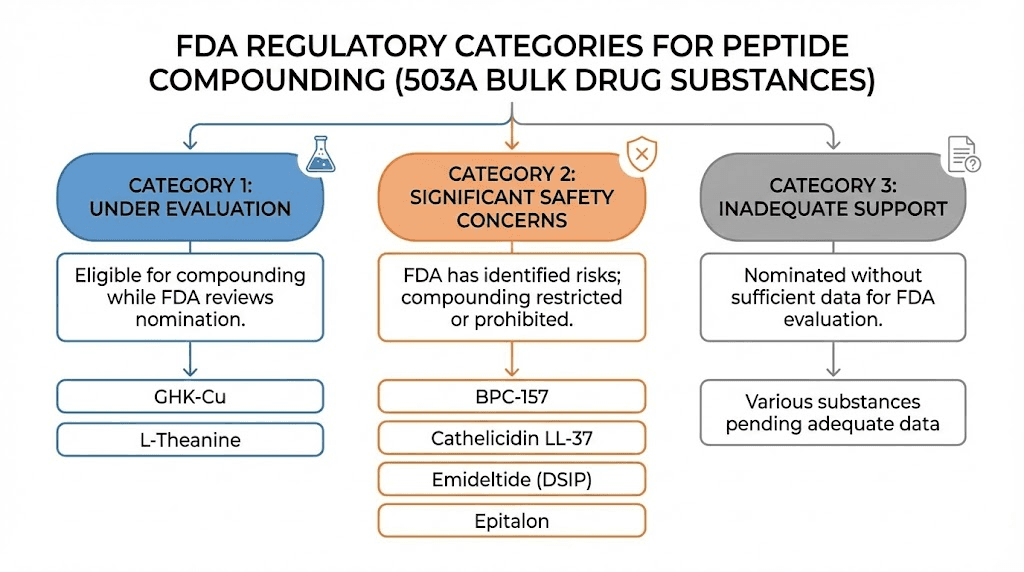
For peptides, the FDA maintains a “bulks list” of substances that pharmacies can use in compounding. This list is divided into categories that determine what’s legal to compound.
Category 1 peptides: legal for compounding
Category 1 substances have been evaluated by the FDA and deemed acceptable for use in compounding. Pharmacies can legally compound these peptides when a physician writes a prescription for an individual patient with a documented medical need.
Currently, Category 1 includes a limited number of peptides. Sermorelin is one example, used for growth hormone optimization. Gonadorelin acetate has been added to this category. GHK-Cu was placed in Category 1, though notably not for injectable administration, limiting its use to topical applications for skin health and hair growth.
NAD+ can also be compounded under this framework, though it’s technically a nucleotide rather than a peptide. The Category 1 list represents the small subset of bulk substances the FDA considers safe enough for compounding use.
Category 2 peptides: banned from compounding
Category 2 is where most popular research peptides end up. These substances have been evaluated and the FDA has identified “significant safety risks” that preclude their use in compounding. Compounding pharmacies cannot legally prepare these peptides for human use, period.
The list includes many peptides you’ve probably heard about.
BPC-157 sits firmly in Category 2. The FDA cited immunogenicity concerns and impurity risks when making this determination. Despite the extensive anecdotal reports and animal studies suggesting benefits for injury healing, the FDA determined the safety data was insufficient for human compounding.
TB-500, also known as Thymosin Beta-4 fragment, is banned from compounding. So is AOD-9604, once touted as a fat loss peptide. Ipamorelin acetate, a growth hormone secretagogue, cannot be compounded. KPV, despite its promise for inflammation and gut health, is prohibited.
CJC-1295 with DAC is no longer available for compounding. Semax and Selank, popular for cognitive enhancement, are on the banned list. Melanotan II cannot be compounded. Epitalon, despite research suggesting longevity benefits, is prohibited.
This Category 2 designation means that even if your doctor wanted to prescribe these peptides, no legitimate compounding pharmacy can legally fill that prescription.
Category 3 peptides: insufficient data
Category 3 contains substances nominated for the bulks list but submitted without sufficient supporting information. These peptides haven’t been fully evaluated, so the FDA hasn’t made a determination about their safety for compounding. They exist in regulatory limbo, neither approved nor explicitly banned.
The practical effect is similar to Category 2, compounding pharmacies generally won’t compound Category 3 substances because the regulatory risk is too high without clear FDA guidance.